

FAQs
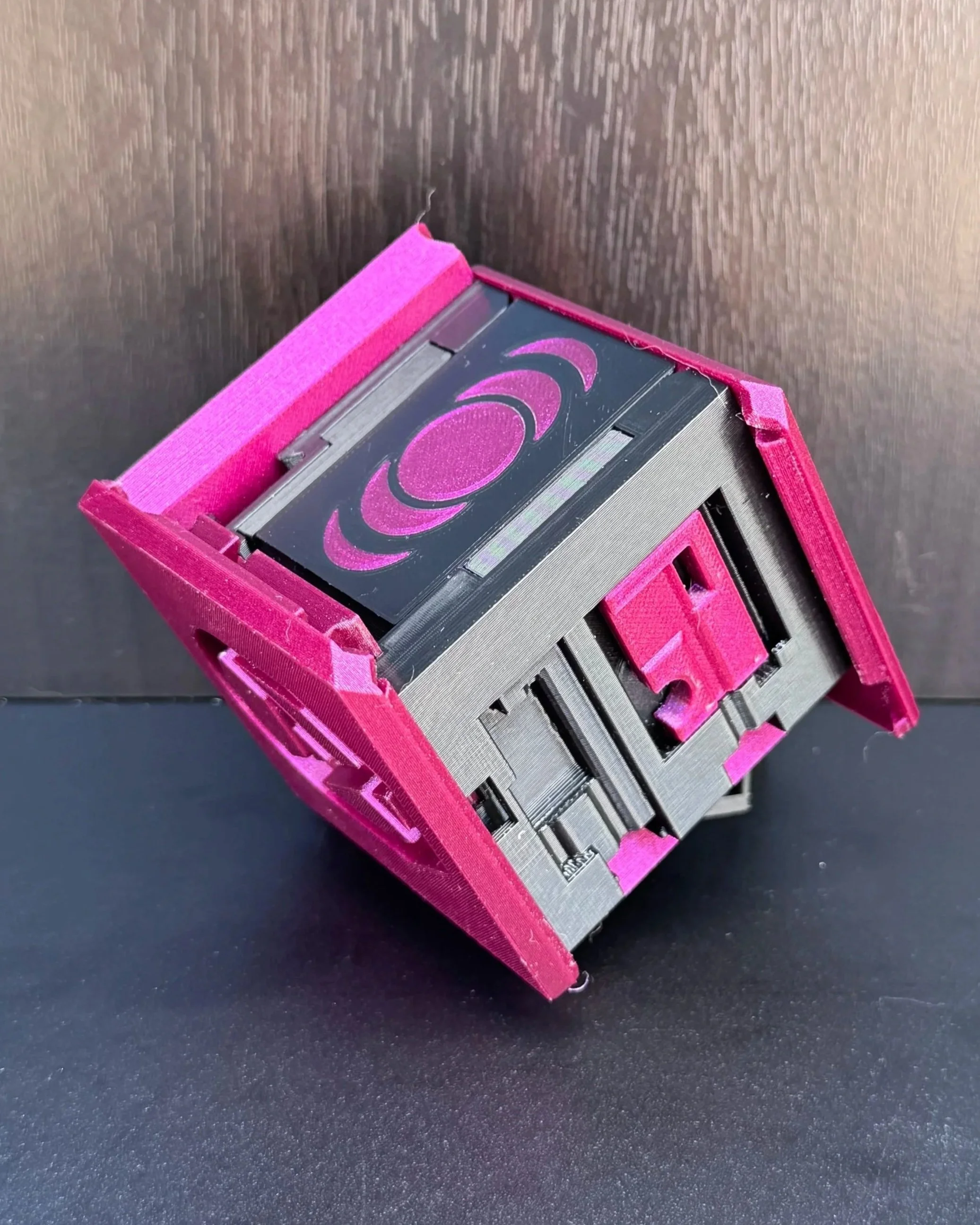
WHAT MAKES A MOWENS PUZZLE?
To put it simply, every one of my designs is a take-apart challenge. You start with a complete object, then slowly remove piece by piece until there’s nothing left. And every puzzle includes a reward or two as the cherry on top!
But on a deeper level, I think of my puzzles as little mechanical ecosystems. Every piece is packed with interesting features, and each of those features serve a role. They play together to create interactions between pieces - limiting range, forcing movement, etc. And while each of these interactions is relatively simple on its own, they all work together, overlapping and intertwining, to create a tangled web of mechanisms.
So your goal as the solver is to untangle that web! As you remove each piece you’ll find new possibilities unlocked - new movements available, new tools to use, and ultimately new pieces to remove.
WHERE DO I START?
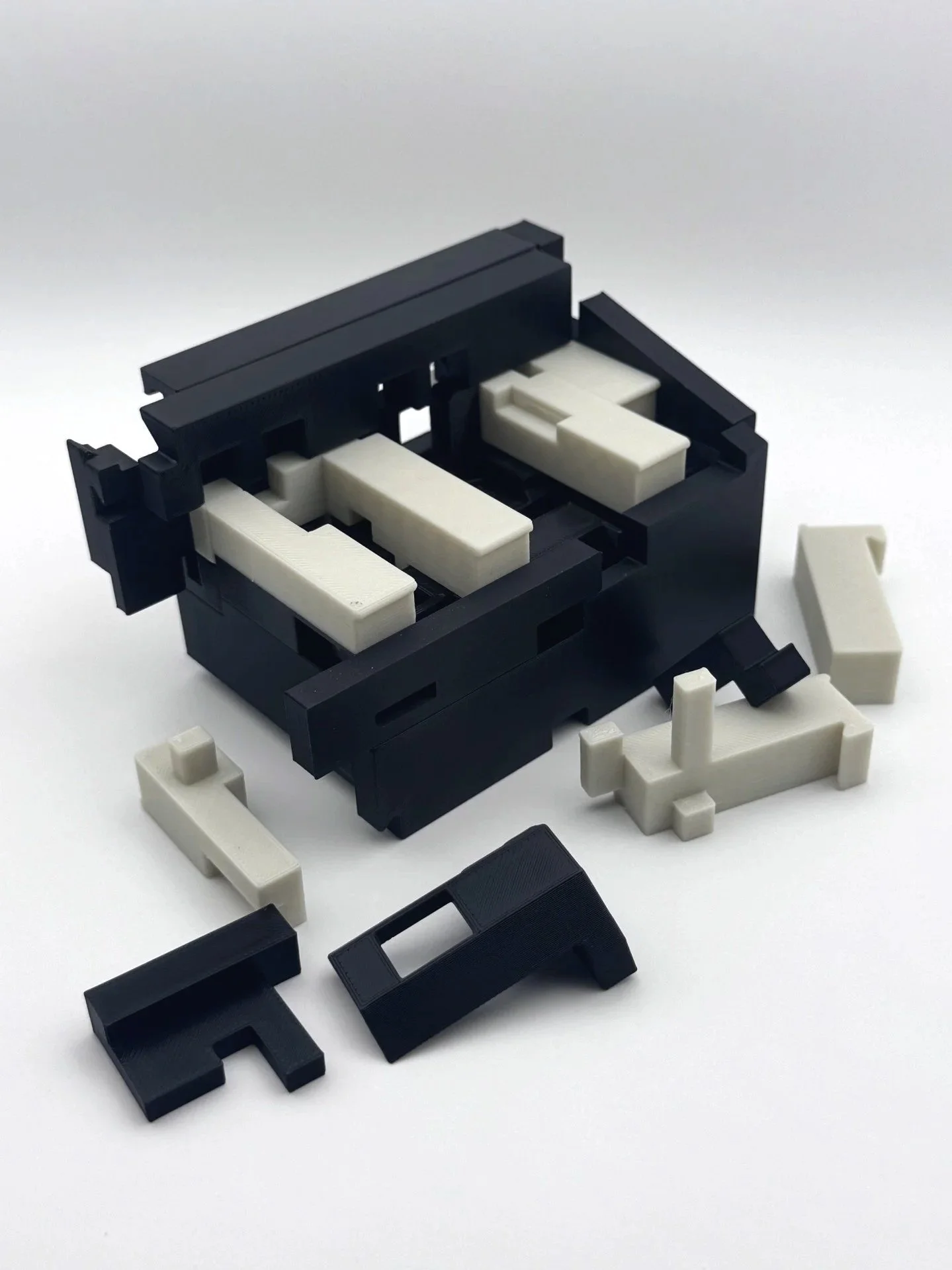
Just jump in! While my puzzles have plenty of pieces and dozens of moves, the best way to begin is just to poke and prod until something gives. You’ll find that every puzzle has a starting point, a single move that begins to unlock more possibilities.
Once you’ve found that first step, I recommend “following the gap.” Whenever a piece moves, it leaves some space where it previously sat, and this space is your best clue on where to go next! Check adjacent pieces to see if they can use the space, or peek inside to gain some idea of what’s happening.
As you progress and remove more pieces, don’t worry if you lose the trail. Fewer obstructions means the pieces that remain are free to move, making it hard to keep track.
But fewer obstructions also means better visibility to what’s going on inside! Take a step back and look closely. Check the tabs, grooves, paths and obstructions. Make a plan based on your best mental model and give it a try! It’s only a matter of time (and persistence) before you succeed.
IT’S SOLVED, NOW WHAT?
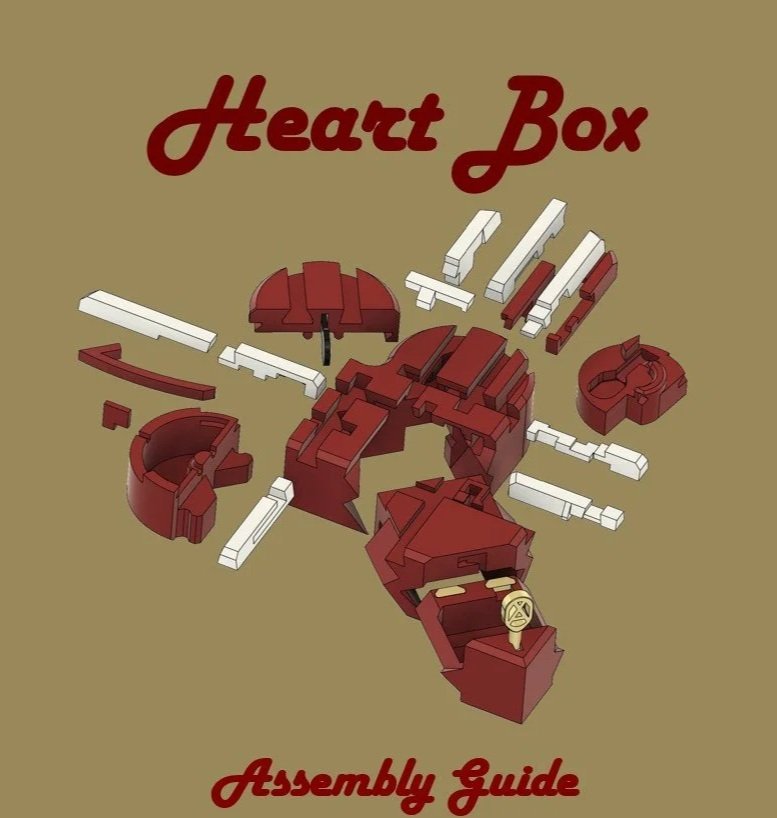
Now it’s time to put it back together! Luckily you have a couple of options - you can either muddle through it by yourself, or you can check out one of the free assembly guides I’ve created for each puzzle!
If you’re debating whether to use the guide, I’d suggest giving it a try yourself first. While difficult and frustrating at times, a blind reassembly is not only satisfying, but also the best way to really understand the puzzle and all its mechanisms.
Or if you’d still like a few hints, the second page of each guide lists all the pieces in order of assembly. Keeping that handy will ensure you stay on the right path, and if a certain piece is giving you trouble, you can always flip to the corresponding page.
DESIGN PROCESS
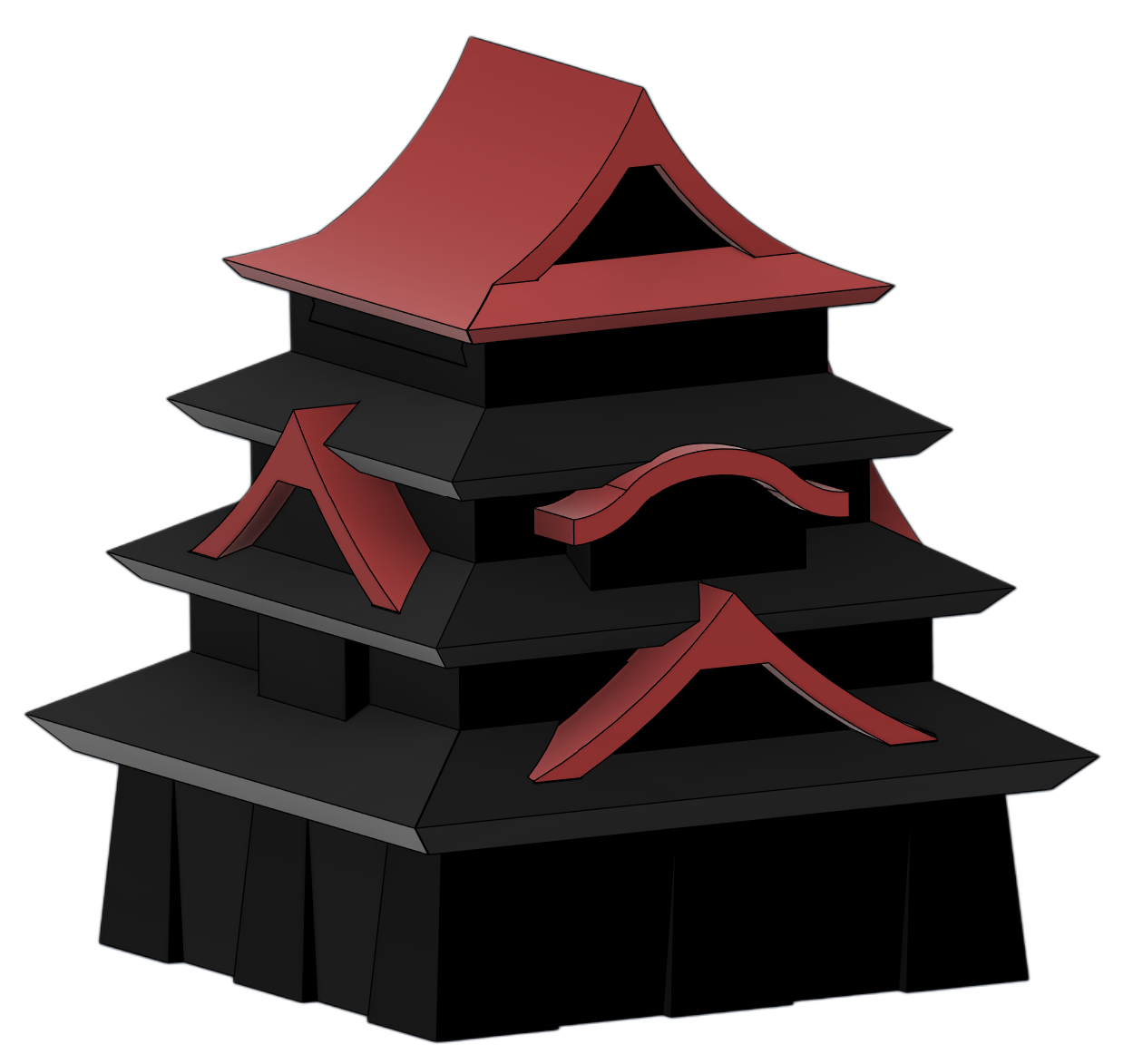
All of my puzzles start with some sort of a theme. It can be a hobby of mine (Piano), or a puzzle mechanic I want to explore (Gravity), or even just an object with compelling features (Dice). Honestly, the hardest part is picking a single theme to pursue.
But once the theme is nailed down, I start modeling from the outside in. My first design is always a single solid piece, a slab of marble that I then begin to carve pieces out of. Fundamental pieces come first, things like piano keys, or the roof of a castle.
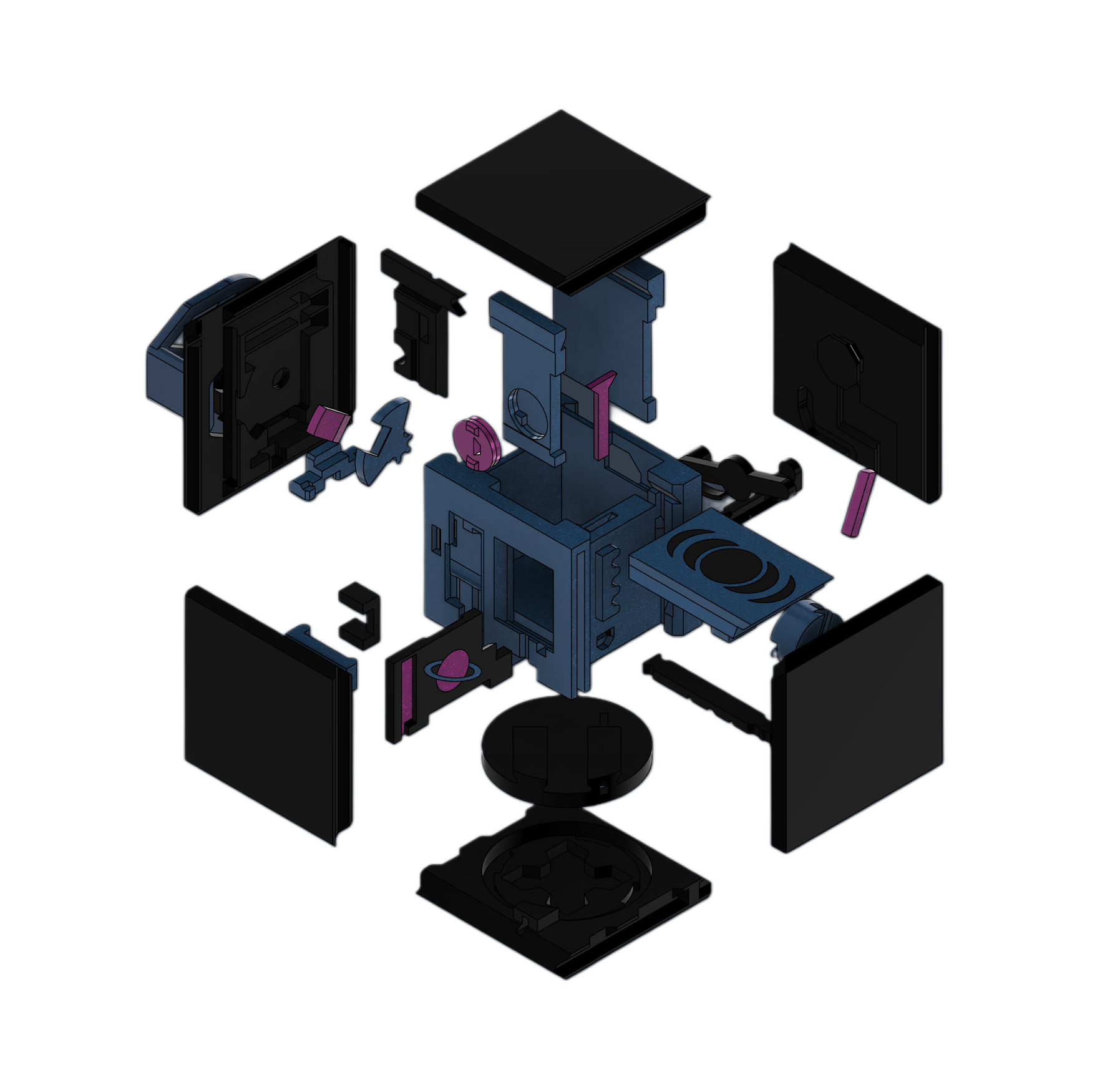
Then finally the fun part - the mechanisms! This is when I start crafting the path through the puzzle. I pick the first piece to move and give it some freedom to do so. From there it’s a seemingly endless cycle of adding features to one section and cutting away from others, until every piece is locked in place by its predecessor. This is where all the auxiliary pieces are made - sliders, switches, spinners, anything that can help tie one piece to another.
Of course it doesn’t stop there, instead the next endless cycle begins. This time it’s one of printing, testing and refining, not to mention the integration of new ideas, and exploitation of any wasted space.
But all things come to an end, and eventually every puzzle becomes ready for release!
For anyone interested in learning more, consider checking out my Patreon! There you can find write-ups on some of my favorite mechanisms, interesting pieces, design challenges, and more.
All posts are completely free.